
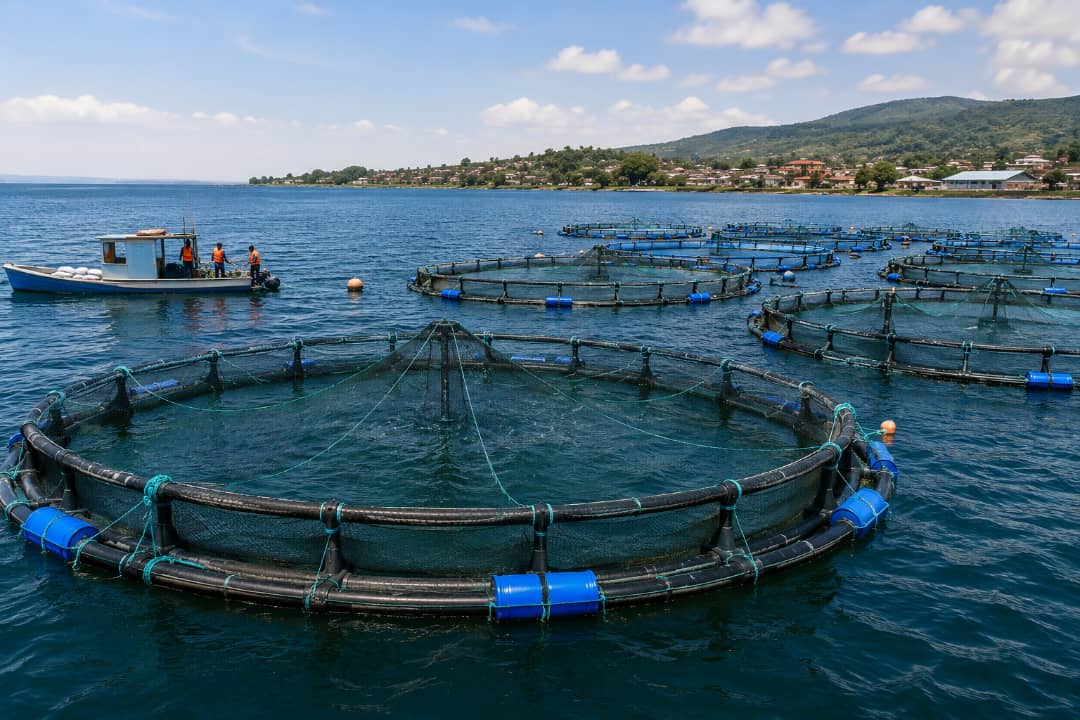
Aquaculture farm structures on Lake Victoria near Kisumu

Aquaculture Association of Tanzania

Advancing Tanzania's blue food economy.

AAT is the private-sector apex voice connecting farmers, processors, traders, researchers, government and partners to grow a competitive, inclusive and sustainable aquaculture industry.

About AAT

An apex platform for the entire aquaculture value chain.

Since becoming operational in 2017, AAT has represented producers, traders, exporters and processors while safeguarding private-sector interests in national and international conversations.

Founded 2016
Operational 2017
Role Apex private-sector association
Vision

An economically vibrant and sustainably prosperous aquaculture industry.

Mission

Driving inclusive, transformative, competitive and sustainable aquaculture growth in Tanzania.

What We Do

From policy tables to farm gates, AAT turns coordination into growth.

Policy and advocacy

Addressing policy, legal, bylaw and regulatory issues that shape the competitiveness of aquaculture enterprises.

Finance access

Building partnerships with financial institutions and credit providers to unlock productive resources for farmers.

Market linkages

Connecting Tanzanian aquaculture products to local, regional and international buyers with better supply pathways.

Research and technical support

Guiding standards, compliance, productivity, traceability and farmer capability through technical extension systems.

Farmer training

Supporting pond management, fish health, climate-resilient farming practices, business planning and marketing capability.

Inputs and hatchery coordination

Helping farmers access quality feed, fingerlings and coordinated services that strengthen commercial production.

Fish farm cages on a calm blue lake
Aquaculture in Tanzania

Opportunity is visible on the water. Growth needs alignment on land.

Tanzania's aquaculture sector holds powerful promise for food, nutrition, employment and exports. AAT's work focuses on the systems that make that promise investable: better information, coordinated actors, finance, infrastructure, skills, quality and climate-smart practice.

Lake Victoria basin Western Indian Ocean coast National market corridors

Strategic Pillars

A seven-part operating map for sector transformation.

Drawn from the strategic themes in the AAT presentation, these pillars translate constraints into coordinated action across the aquaculture value chain.

01

Sustainable mapping

Use spatial planning to identify suitable sites and reduce conflict.

02

Feed and seed

Promote high-quality, sustainable, affordable and accessible inputs.

03

Long-term finance

Expand investment pathways for production, processing and trading.

04

Policy infrastructure

Resolve land, policy and infrastructure bottlenecks.

05

Market development

Build reliable buyer relationships and backward supply linkages.

06

Quality production

Improve productivity, competitiveness, standards and value addition.

07

Human resources

Strengthen industry skills, entrepreneurship and coordinated capability.

Sustainability Focus

Climate-smart growth designed around water, soil and people.

AAT promotes environmental sustainability by helping the industry manage water quality, soil health, appropriate chemical use and emissions control while expanding opportunity for youth and women.

Sustainable aquaculture
Water quality
Soil health
Safe inputs
Lower emissions
Partners

Built for serious collaboration.

AAT's work sits at the meeting point of national leadership, regional institutions, research organizations and development partners.

Partner logos from the AAT presentation TrueFish project logo
Contact

Bring Tanzania's aquaculture agenda into sharper focus.

For partnerships, policy engagement, market linkage work and technical collaboration, connect with AAT.

Dar es Salaam, Tanzania